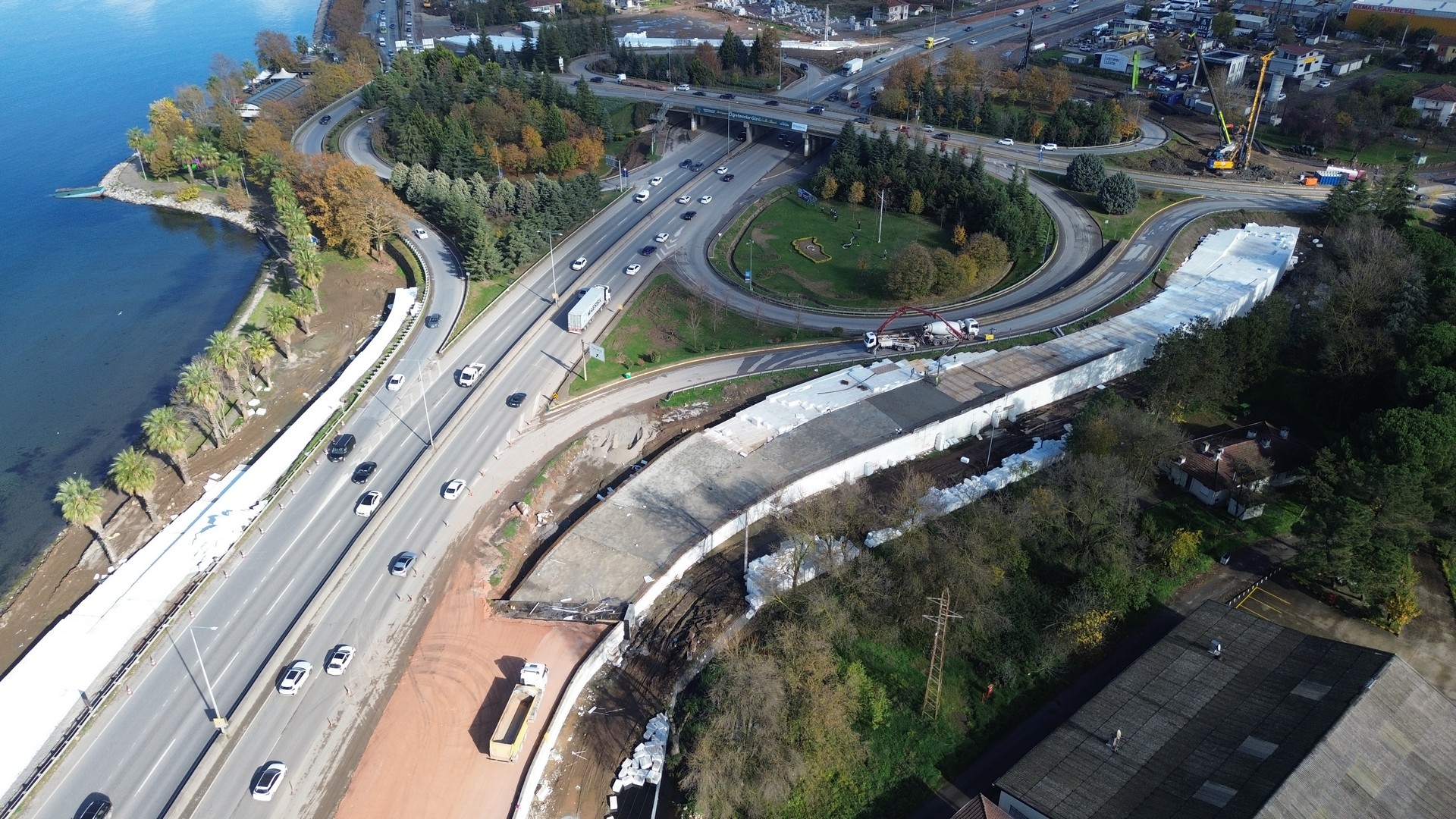
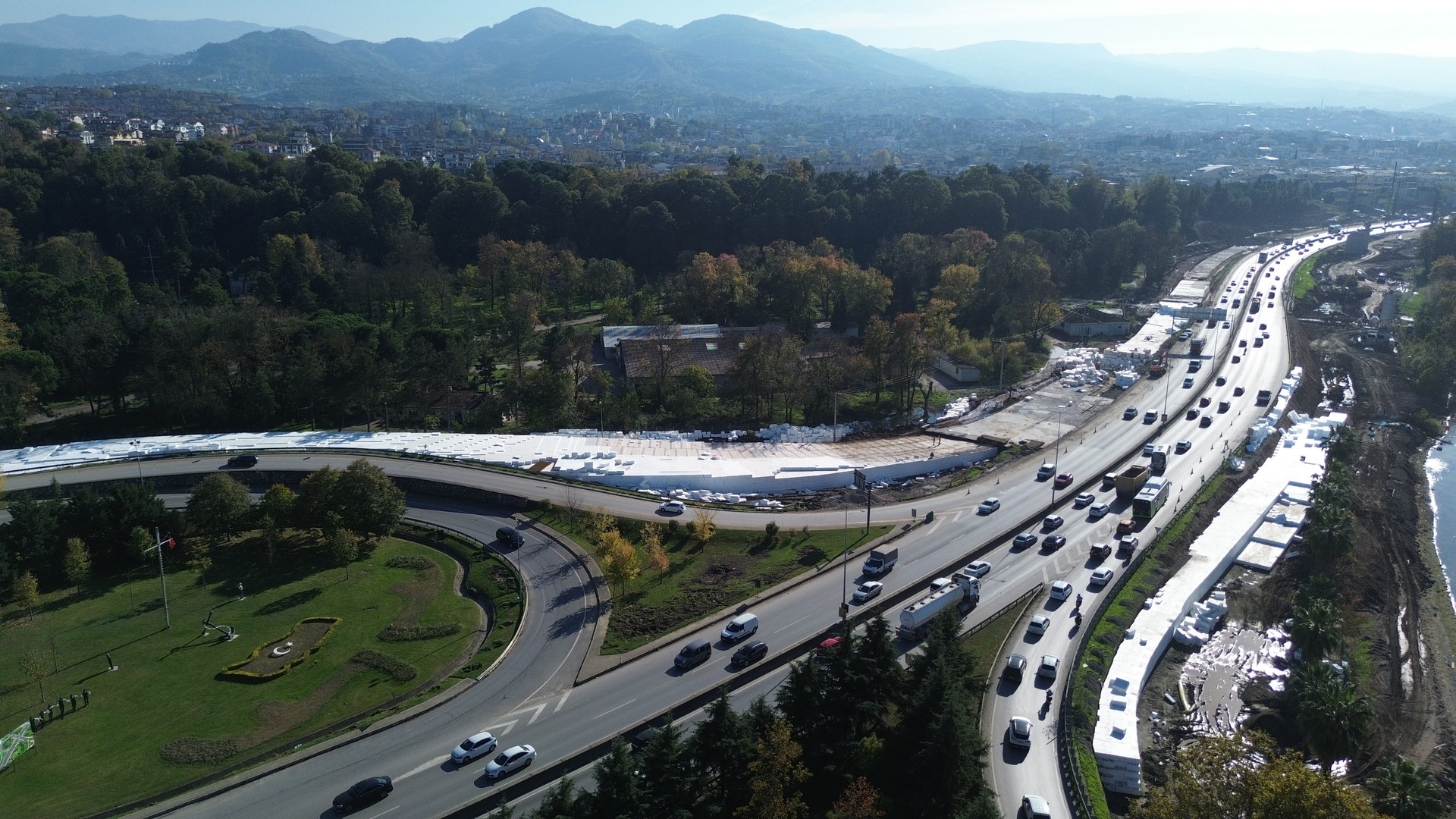
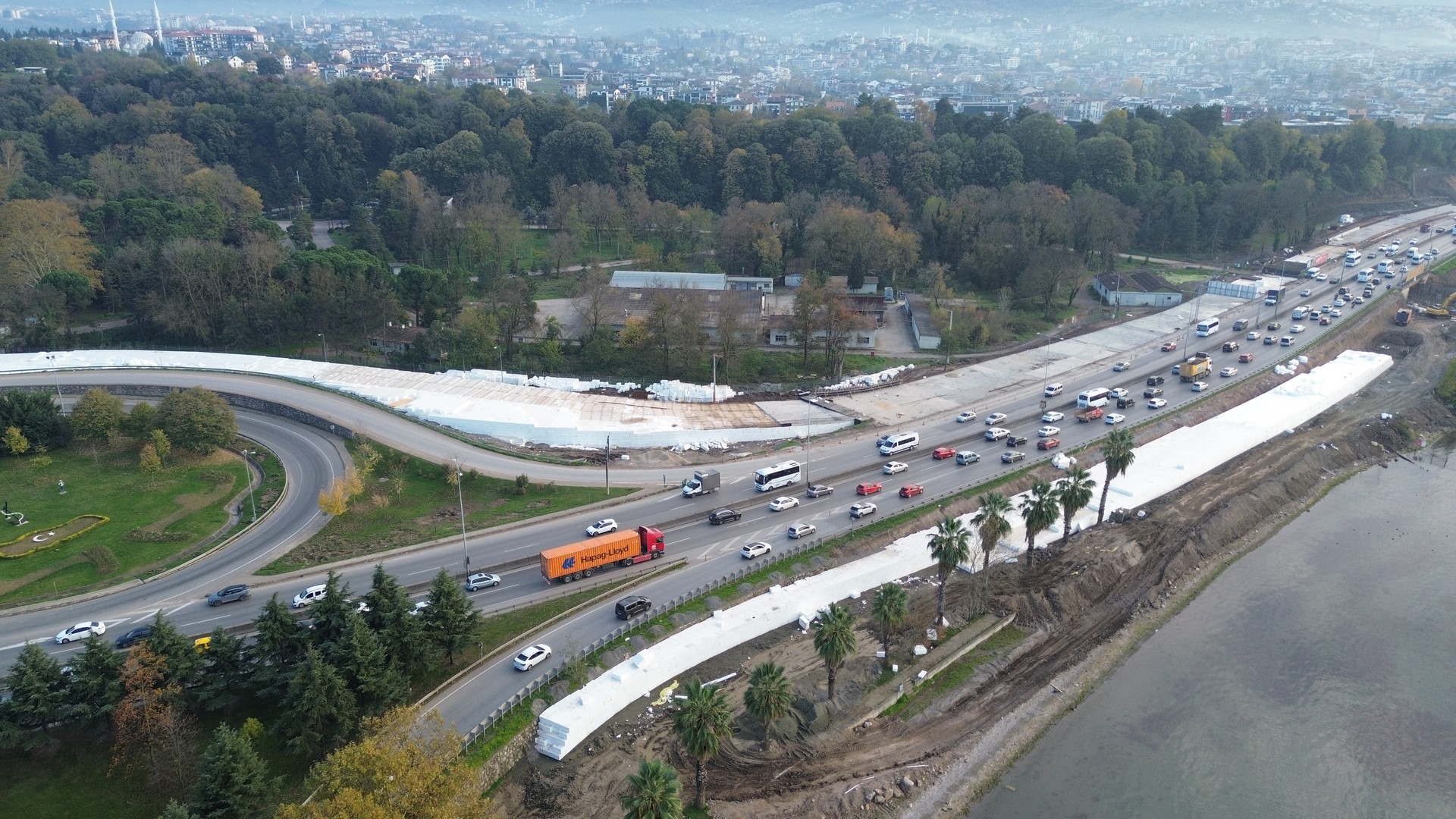
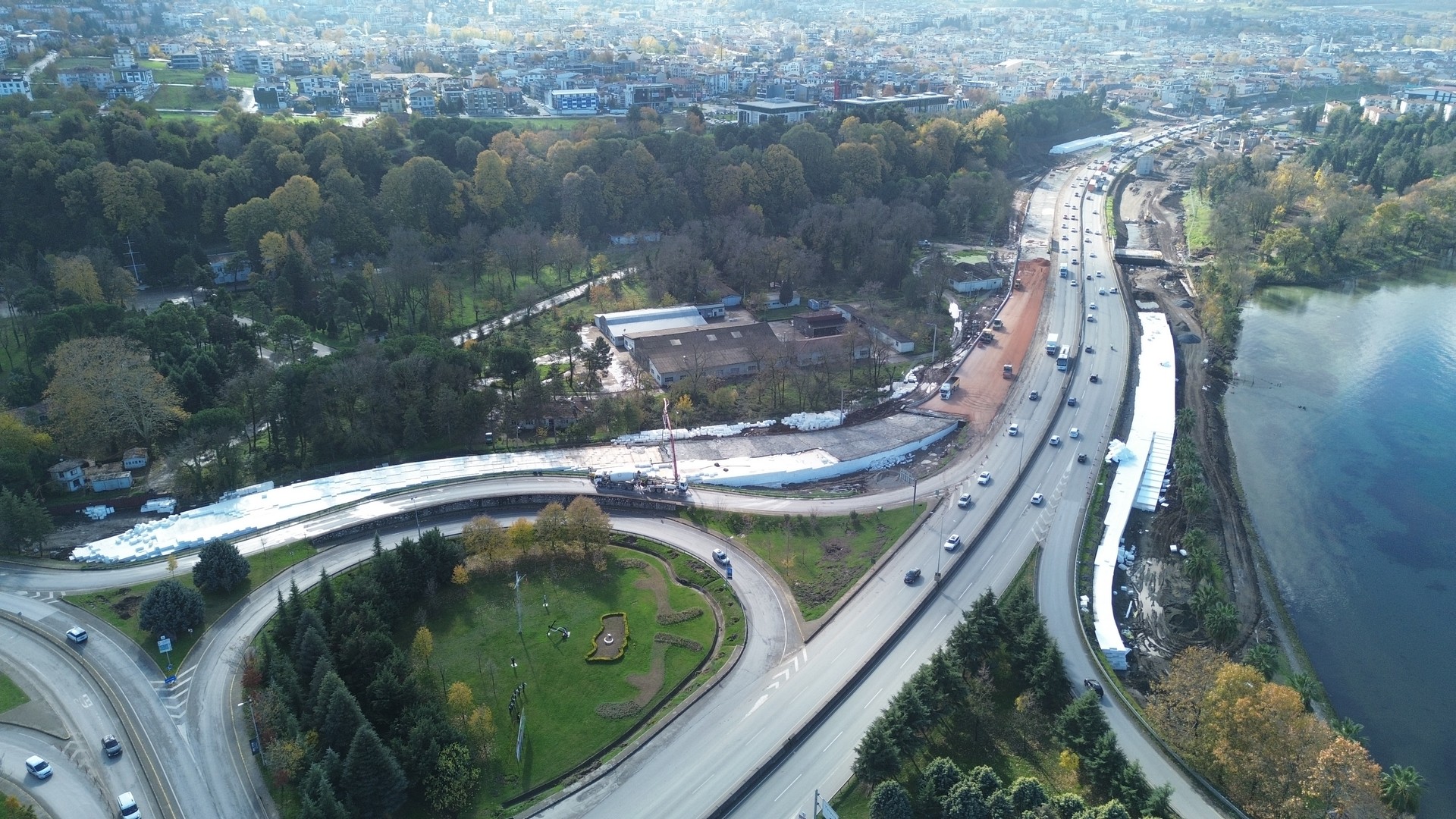
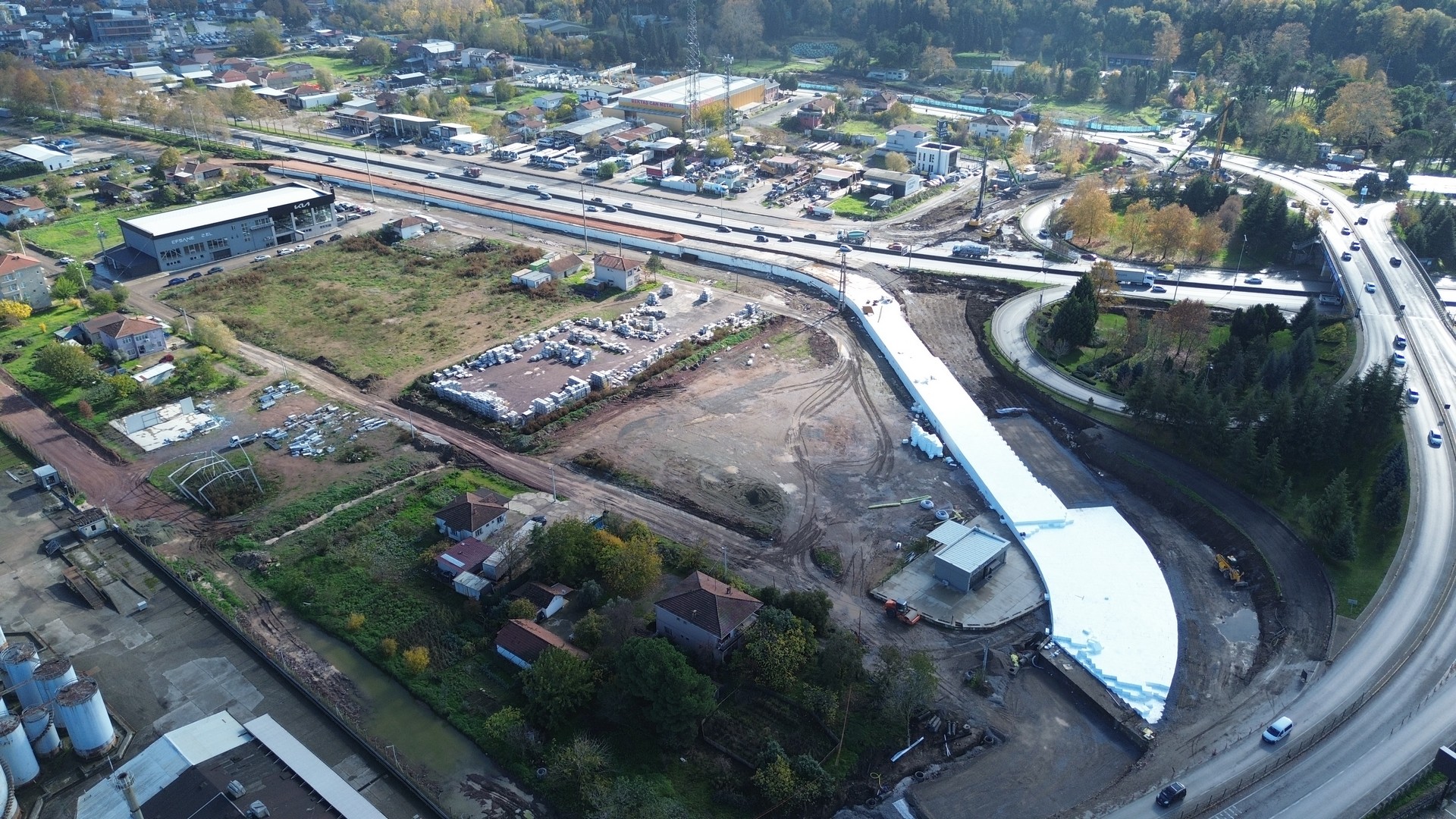
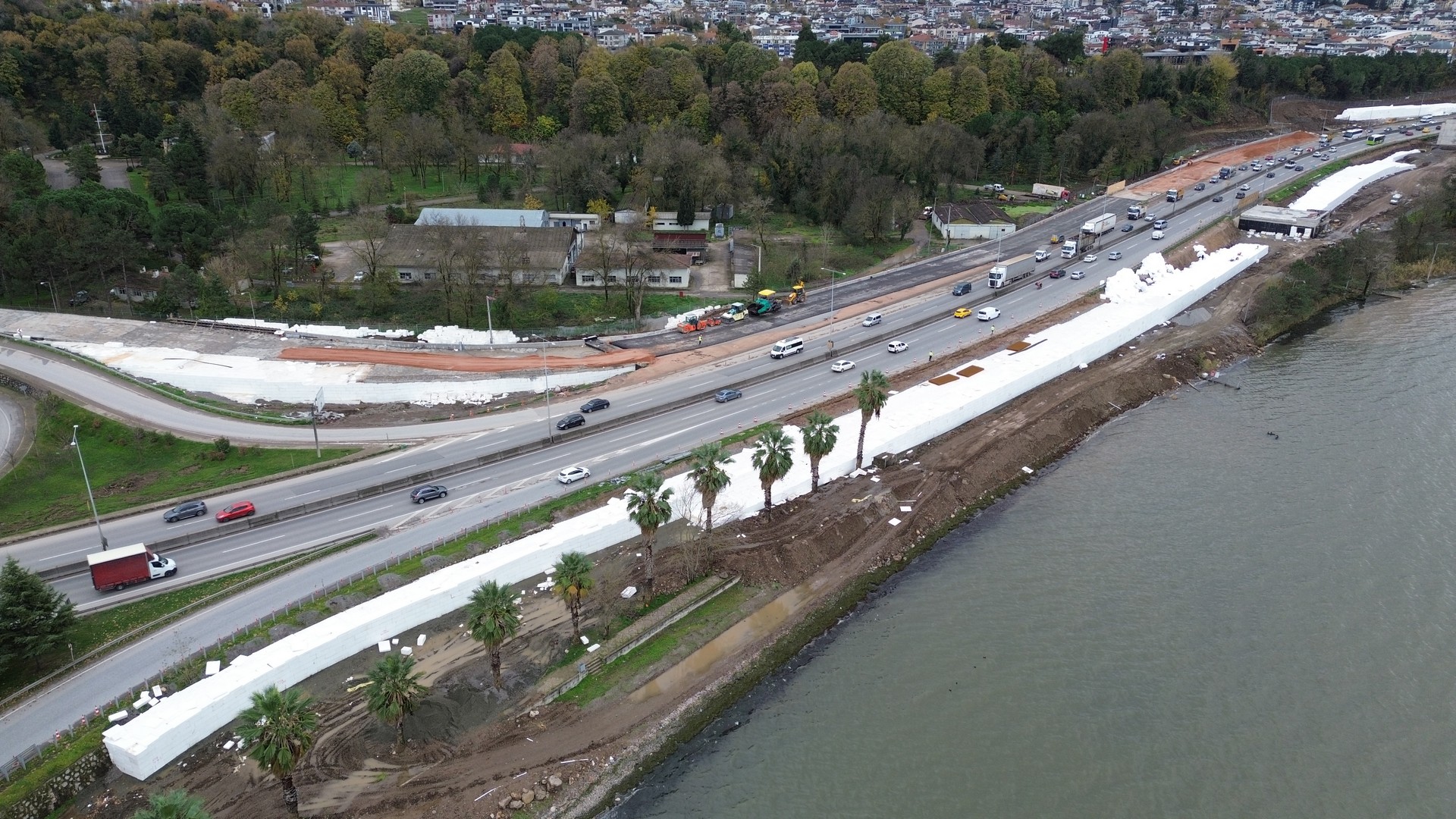
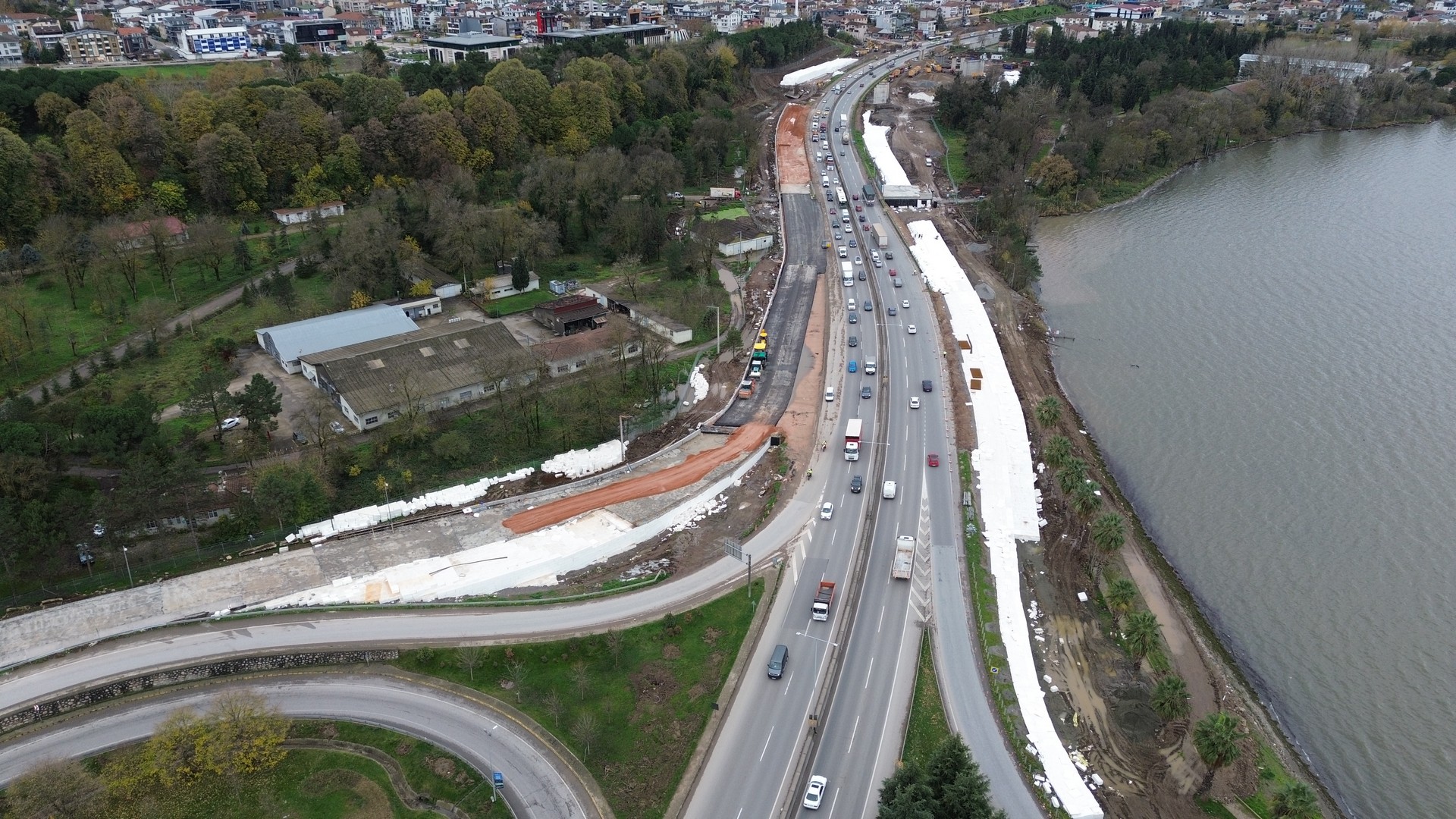
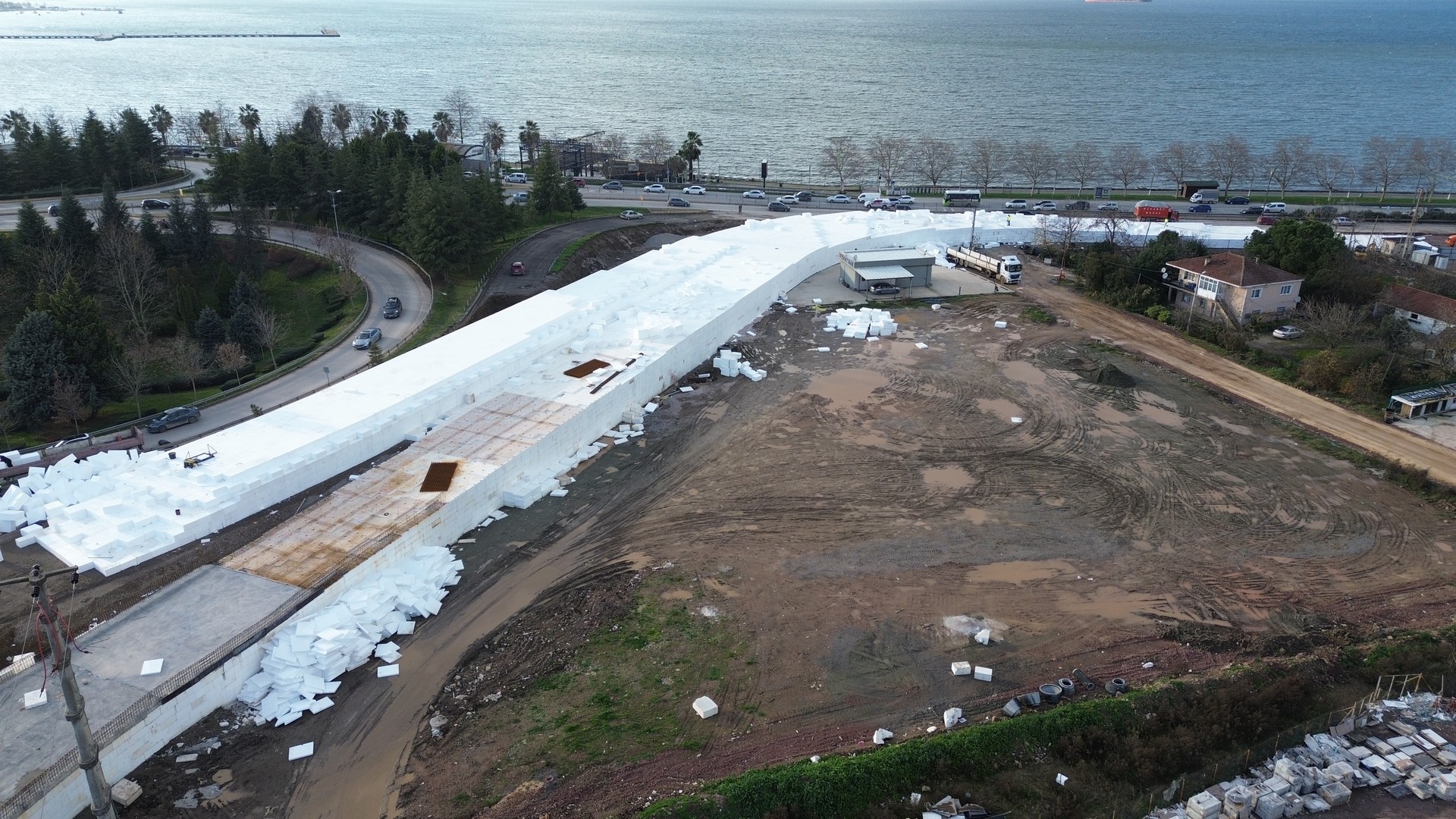
Başiskele / Kocaeli
Site Conditions
- The local ground profile consisted of very soft, highly compressible elastic silt, high-plasticity clay and sand layers.
- Construction of mechanically stabilized earth (MSE) embankments over conventional ground improvement systems would have increased the overall project cost.
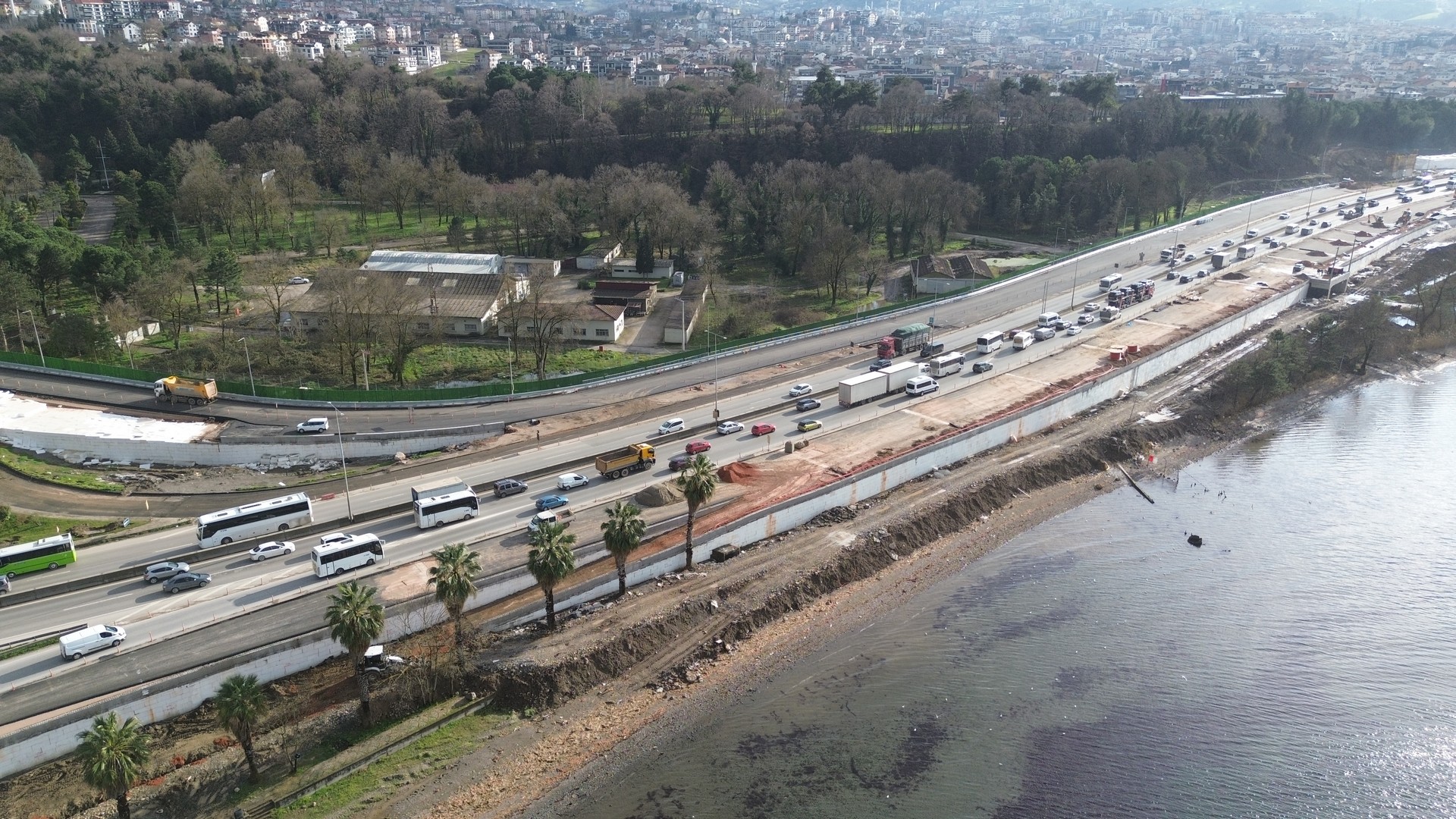
- The new embankments required for lane widening along the existing D-130 highway would have been disadvantageous in terms of constructability and construction duration if conventional placement and compaction methods were used under live traffic conditions.
- Differential settlements between the new lane-widening embankments and the existing historical fill had to be limited to acceptable levels in accordance with external stability and ride comfort criteria.
- Along certain sections of the alignment, conventional embankments constructed over the main water transmission pipeline would have induced stress increases large enough to adversely affect the stability of the pipeline.
Designed Solution
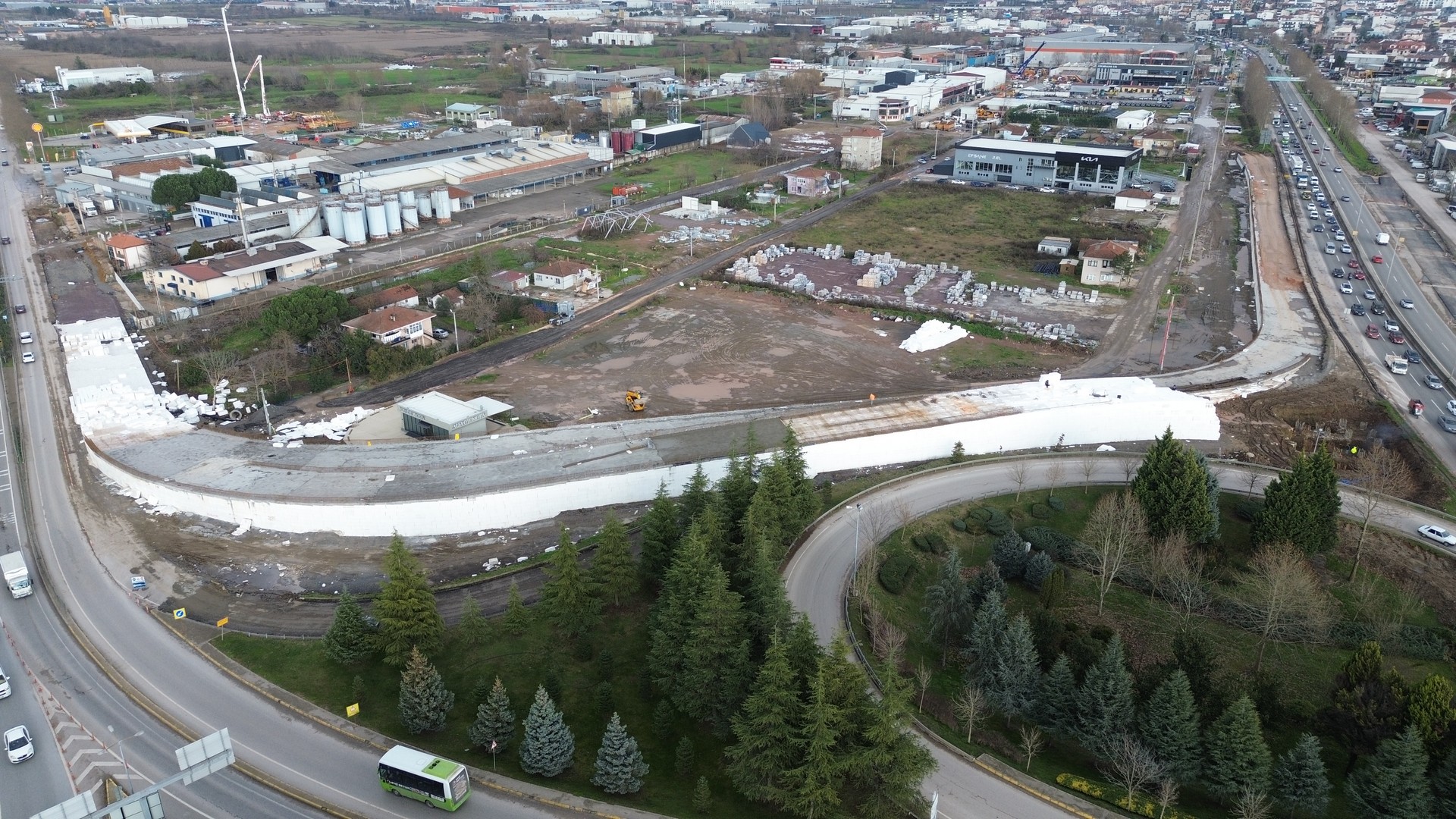
- Construction of the roadway embankments using geofoam block technology.
Advantages of the Applied Geotechnology
- The project could be completed within a substantially shorter construction period compared with conventional construction methods.
- Compared with the conventional alternative of ground improvement followed by MSE embankment construction, the geofoam solution provided a more economical alternative in terms of overall project cost.
- Compared with relocating the water transmission pipeline or constructing a protective structure along the alignment, the selected solution enabled substantially faster construction and provided a more economical alternative in terms of overall project cost.
Performance Under Service Loads
- A comprehensive instrumentation program using settlement plates was implemented.