Load Transfer Platform (LTP)
A Load Transfer Platform (LTP) is a geosynthetic-reinforced granular engineered platform designed to safely and efficiently transfer loads from embankments, foundations or pavements constructed over weak and highly compressible soils to piles, stone columns or similar ground improvement elements.
The LTP is positioned between the column heads and the overlying structure, such as an engineered embankment, raft foundation or industrial floor, and forms a key component of the load transfer mechanism. Its primary function is to transfer a significant portion of the applied loads to the columns through soil arching within the granular platform and the tensioned membrane action of the geosynthetic reinforcement, while limiting differential settlements transmitted to the overlying structure. This mechanism improves the service performance of raft foundations and helps prevent surface deformations commonly referred to as “mushrooming” in embankment applications.
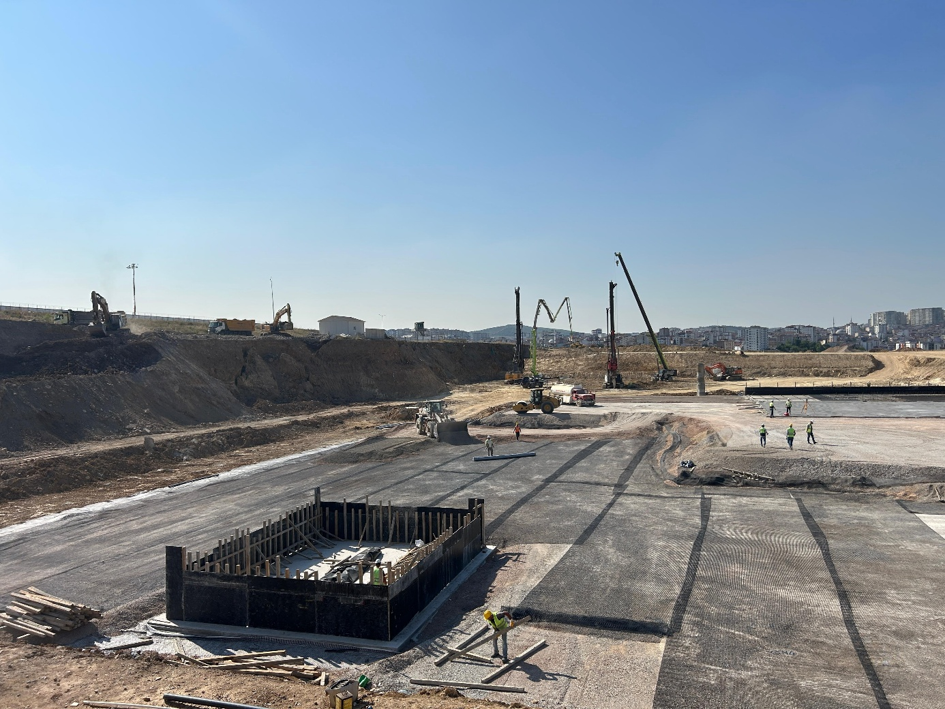
Working Principle
Load transfer in LTP systems is primarily achieved through soil arching within the granular fill and the tensioned membrane effect developed by the geosynthetic reinforcement as it mobilizes tensile forces.
Soil Arching
Differential settlements resulting from the stiffness contrast between the columns and the surrounding matrix soil promote the development of soil arching within the LTP. As a result, a greater proportion of the design loads is transferred to and concentrated over the column heads.
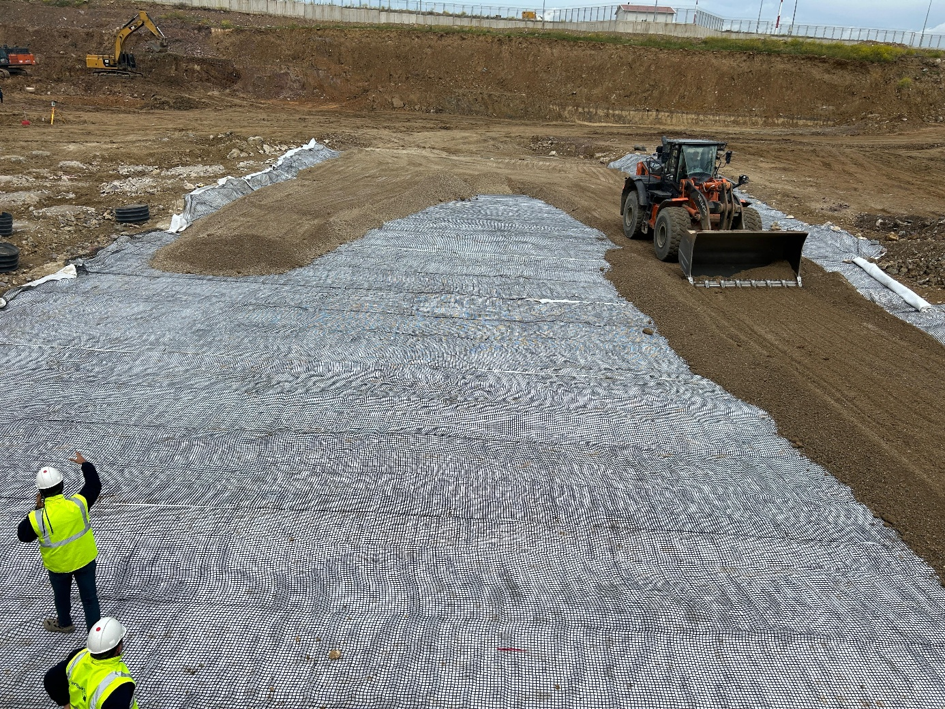
Tensioned Membrane Effect
The weight of the granular fill beneath the soil arch, together with additional surcharge loads, is partially supported by the geosynthetic reinforcement. Through controlled deformation, the reinforcement develops tensile forces and transfers loads toward the column heads. This mechanism becomes particularly important in projects with relatively large column spacing.
Applications
Load Transfer Platforms are widely used in the following applications:
- Railway embankments
- Highway and interchange embankments
- Industrial floors and facilities
- Port and storage areas
- Crane and heavy-equipment platforms
- Infrastructure projects
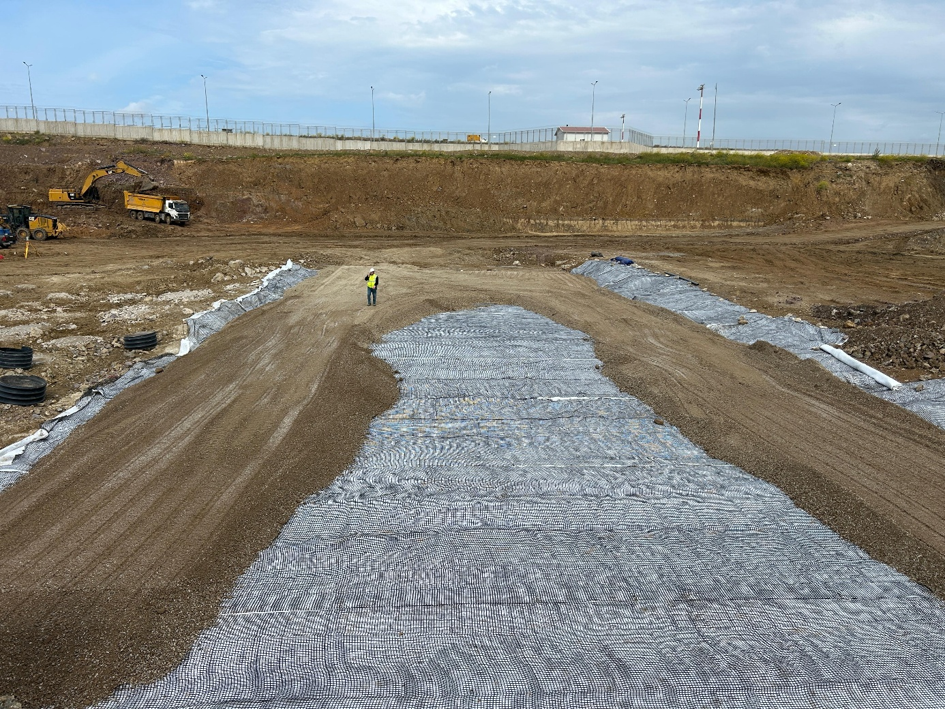
Design Parameters
Geotech carefully evaluates the following engineering parameters in LTP design:
- Column diameter and spacing
- Embankment height and unit weight
- Surcharge loads
- Undrained shear strength of the foundation soil
- Internal friction angle of the platform fill
- Tensile strength and long-term creep behavior of the geosynthetic reinforcement
- Maximum allowable strain of the geosynthetic reinforcement
- Global stability
- Lateral spreading stability
Both serviceability limit states and ultimate limit states are considered in the design.
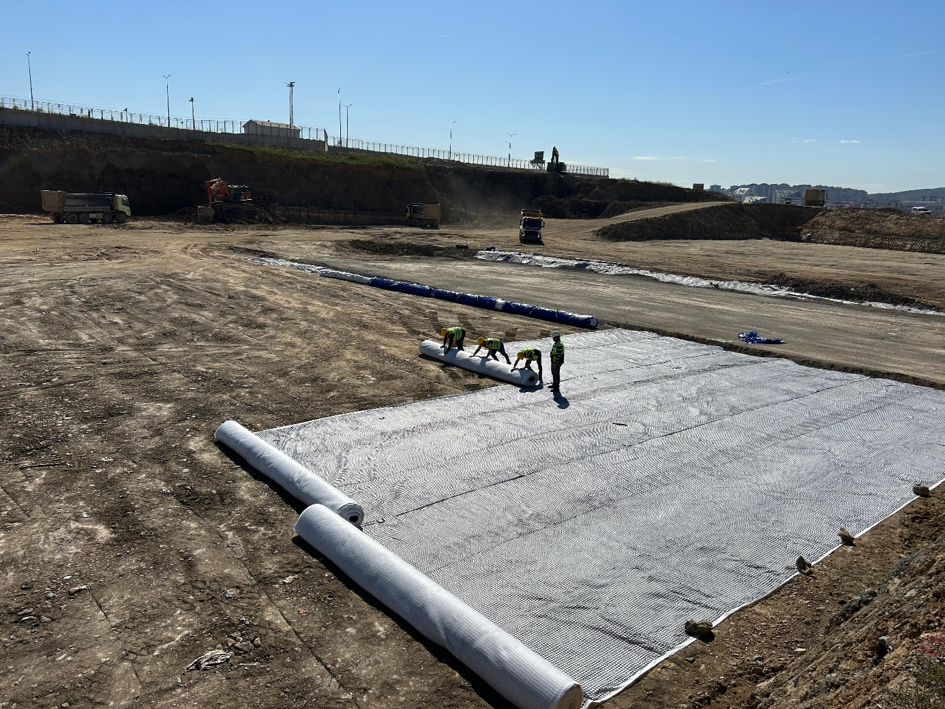
The Geotech Approach
At Geotech Soil and Foundation Engineering, we provide an integrated range of LTP engineering services, including:
- Project-specific optimization of column diameter and spacing
- Global stability and lateral spreading assessments
- Long-term performance evaluation
- Preparation of site installation and construction details
- Geosynthetic selection and preparation of technical specifications
LTP design involves much more than the selection of geosynthetic reinforcement. It is an integrated geotechnical engineering solution in which the foundation soil, column-supported system and structural or embankment loads are evaluated together. A properly designed Load Transfer Platform can optimize the required number of columns, reduce construction costs and improve long-term performance.